


Key takeaways:
XRP (XRP) has been one of the worst-performing top cryptocurrencies this past seven days, dropping as low as 13.50%, a sharp contrast to Bitcoin’s (BTC) 2.25% and Ether’s (ETH) 0.50% declines over the same period.
Down around 10% over the past seven days as of Wednesday, the Ripple-linked token is faring only better than high-volatility memecoins like Dogecoin (DOGE) and Fartcoin (FARTCOIN), which have plunged roughly 20% and 35% over the past week.
Ripple co-founder moves over $140 million in XRP
One of the major downside triggers was Ripple co-founder Chris Larsen reportedly moving nearly $175 million worth of XRP to four addresses, out of which $140 million ended up on crypto exchanges.
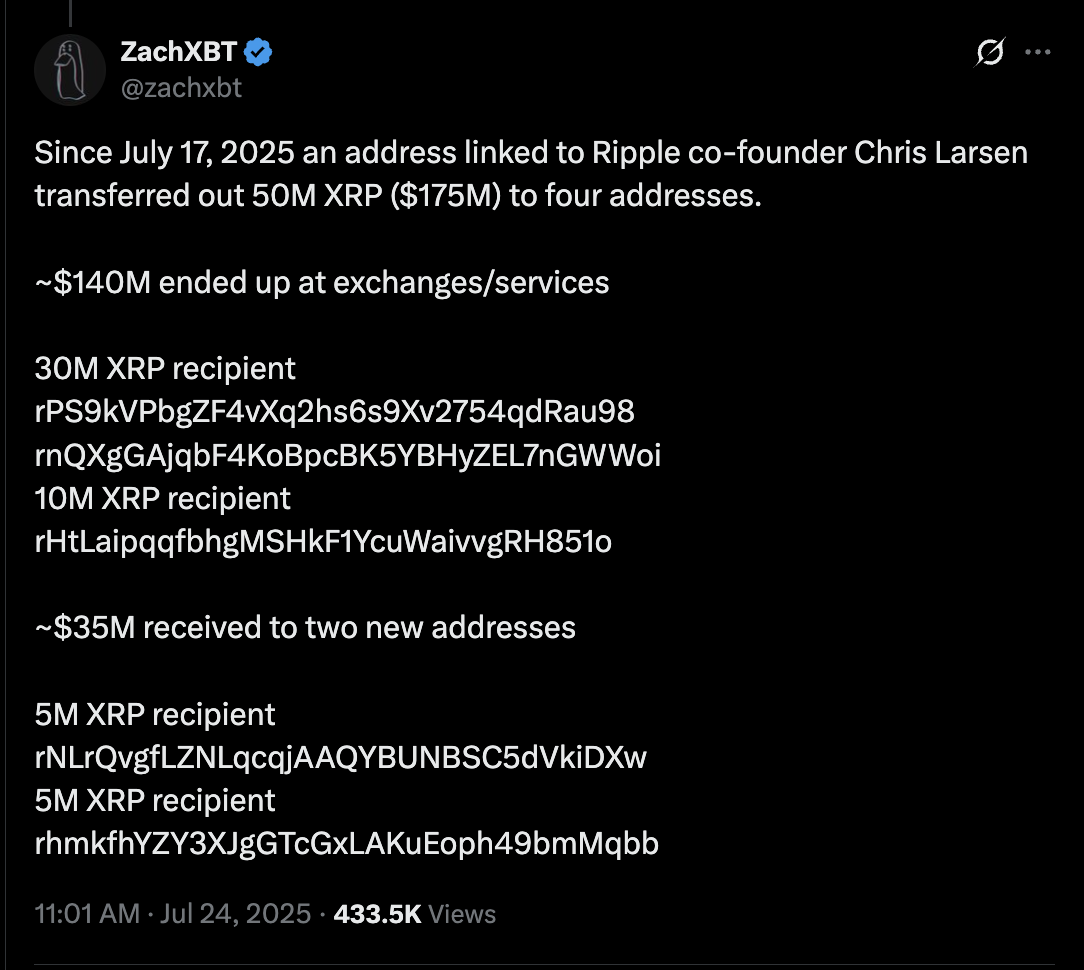
The transfers began on July 17 and coincided with XRP peaking above $3.60, before tumbling over 10‑14%.
The timing suggests that most traders saw Larsen’s large XRP transfers as a signal that he may be selling at higher prices, undermining trust and confidence in the cryptocurrency’s bullish prospects and prompting others to sell as well.
Over 90% of XRP supply sits in profits
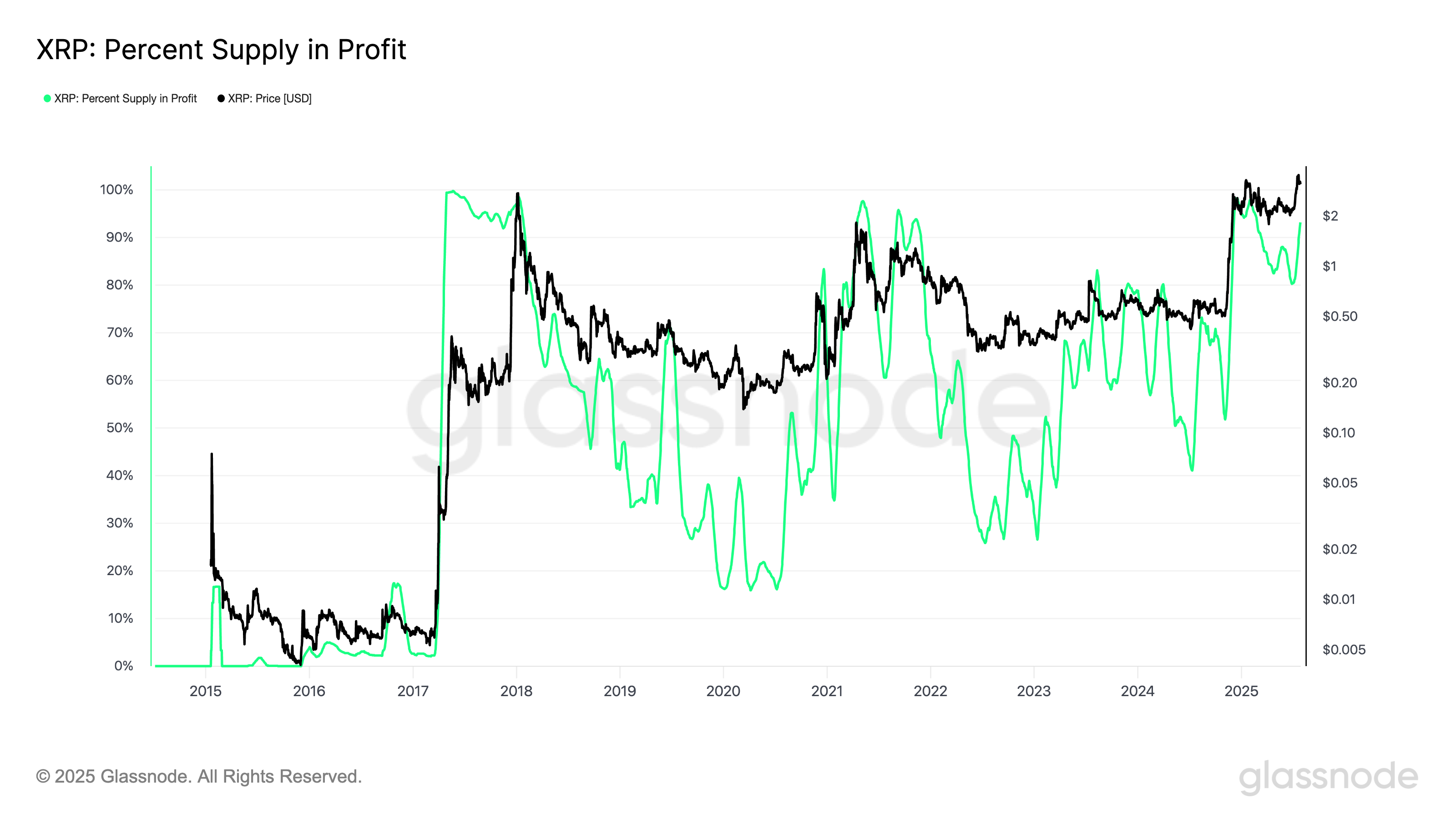
Another reason XRP dropped harder than most top cryptocurrencies is because a large portion—over 90%—of its supply recently flipped into profit.
The percentage of XRP supply in profit surged to 93.24% after the price reached $3.60, according to Glassnode data.
In comparison, Ethereum’s percent supply in profits sits at around 84.70%, which is still below the red “overheated” zone, as shown below.
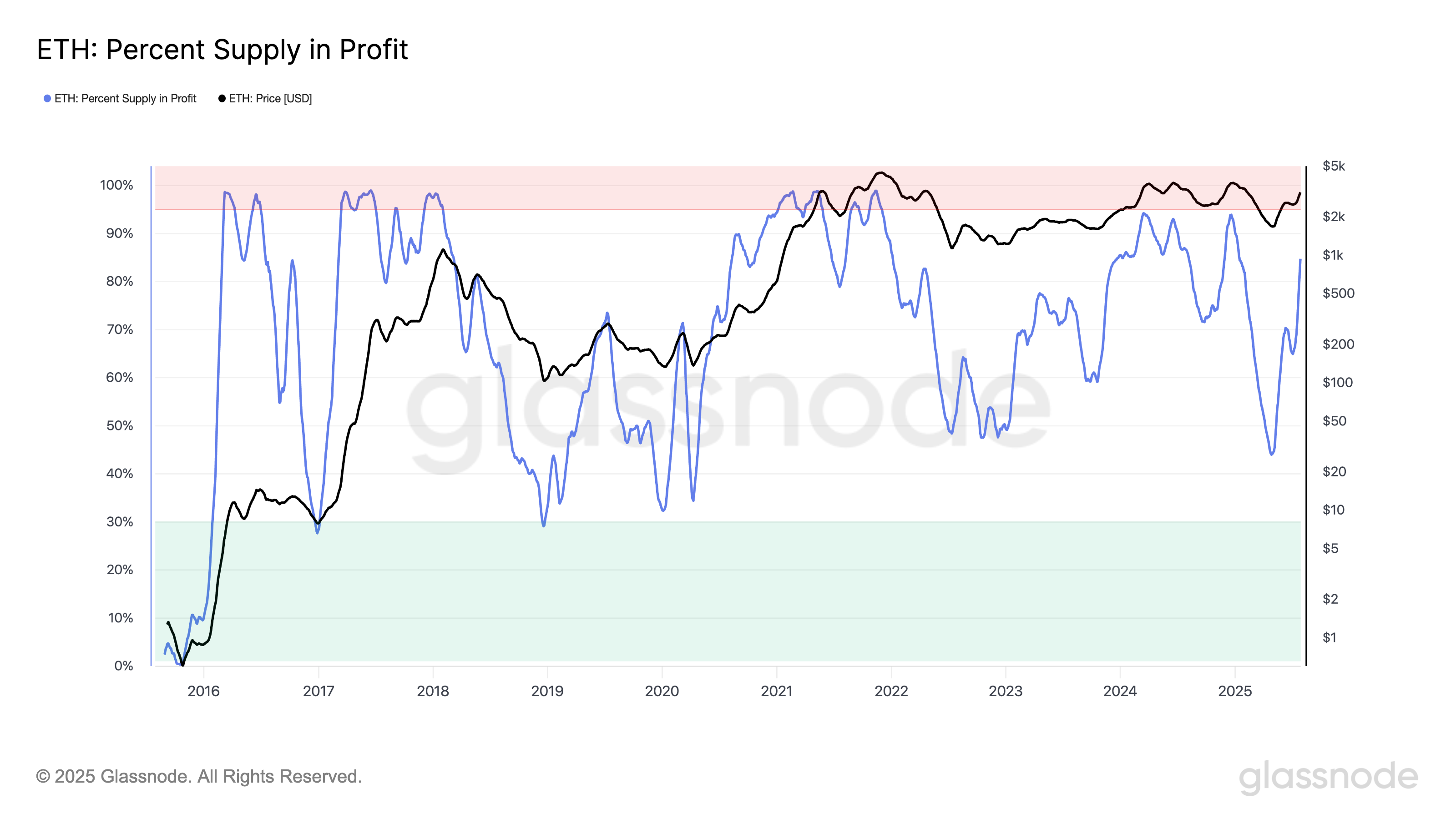
Historically, spikes above the 90% threshold have coincided with price tops. So as the number of profitable holders goes up, the more likely they will book profits or rotate capital to assets with better fundamentals.
XRP drifts toward interim realized prices
XRP’s recent correction appears to reflect a pattern where prices drift back toward short-term realized price levels.
As of Tuesday, the 1-week to 3-month cohort shows a realized price range between $2.30 and $2.80, while XRP trades near $3.13, down from a $3.66 peak, according to Glassnode data.
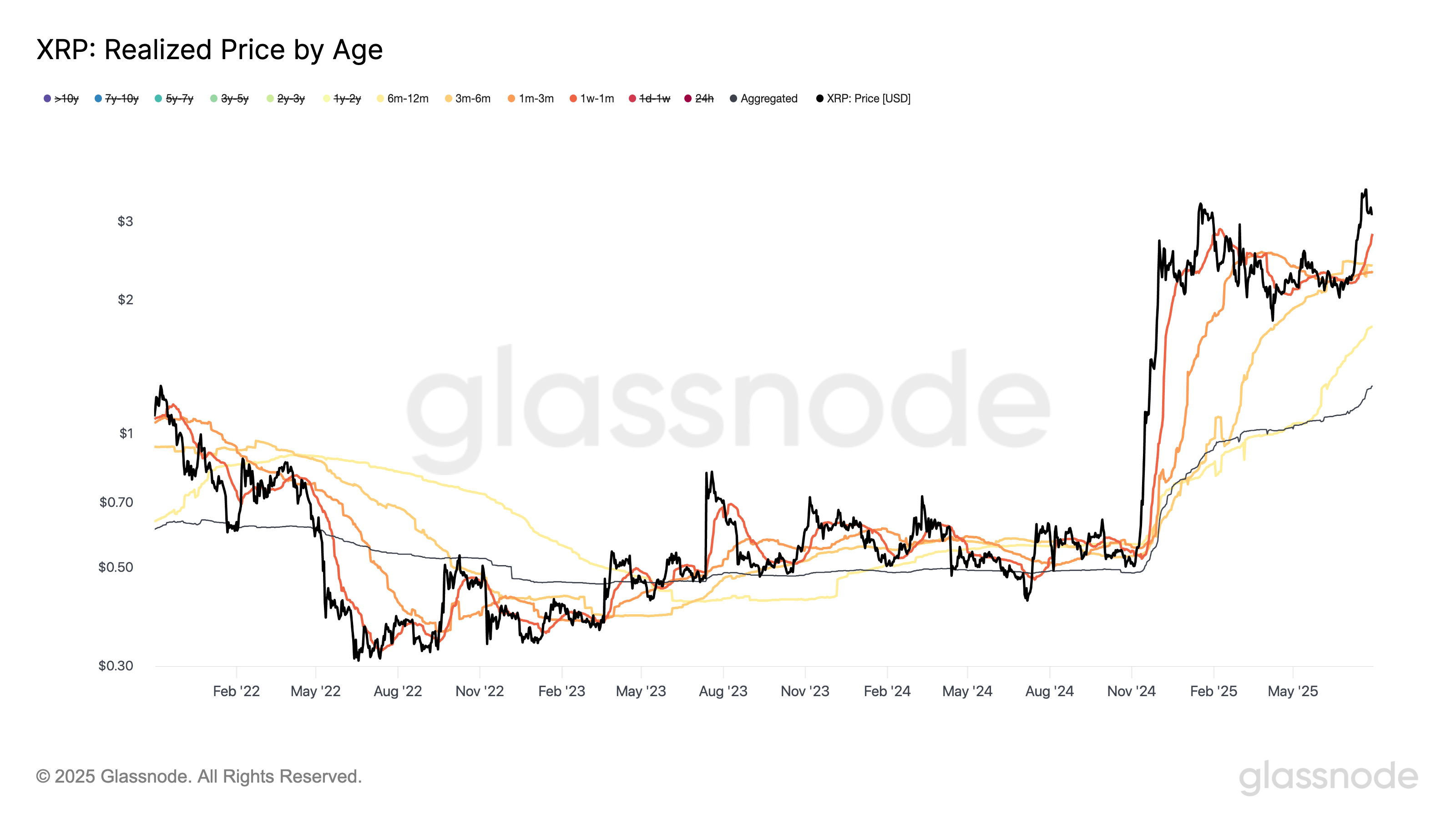
In other words, many short-term XRP holders—those who bought within the past 1 week to 3 months—entered the market at prices between $2.30 and $2.80, according to realized price data.
This cohort was sitting on 20–30% profits before XRP peaked at $3.66.
Related: XRP open interest sheds $2.4B: Is a price crash next?
As the price began to fall, many of these traders likely panicked, rushing to lock in gains or minimize losses, especially as the market retraced toward their cost basis.
This article does not contain investment advice or recommendations. Every investment and trading move involves risk, and readers should conduct their own research when making a decision.
